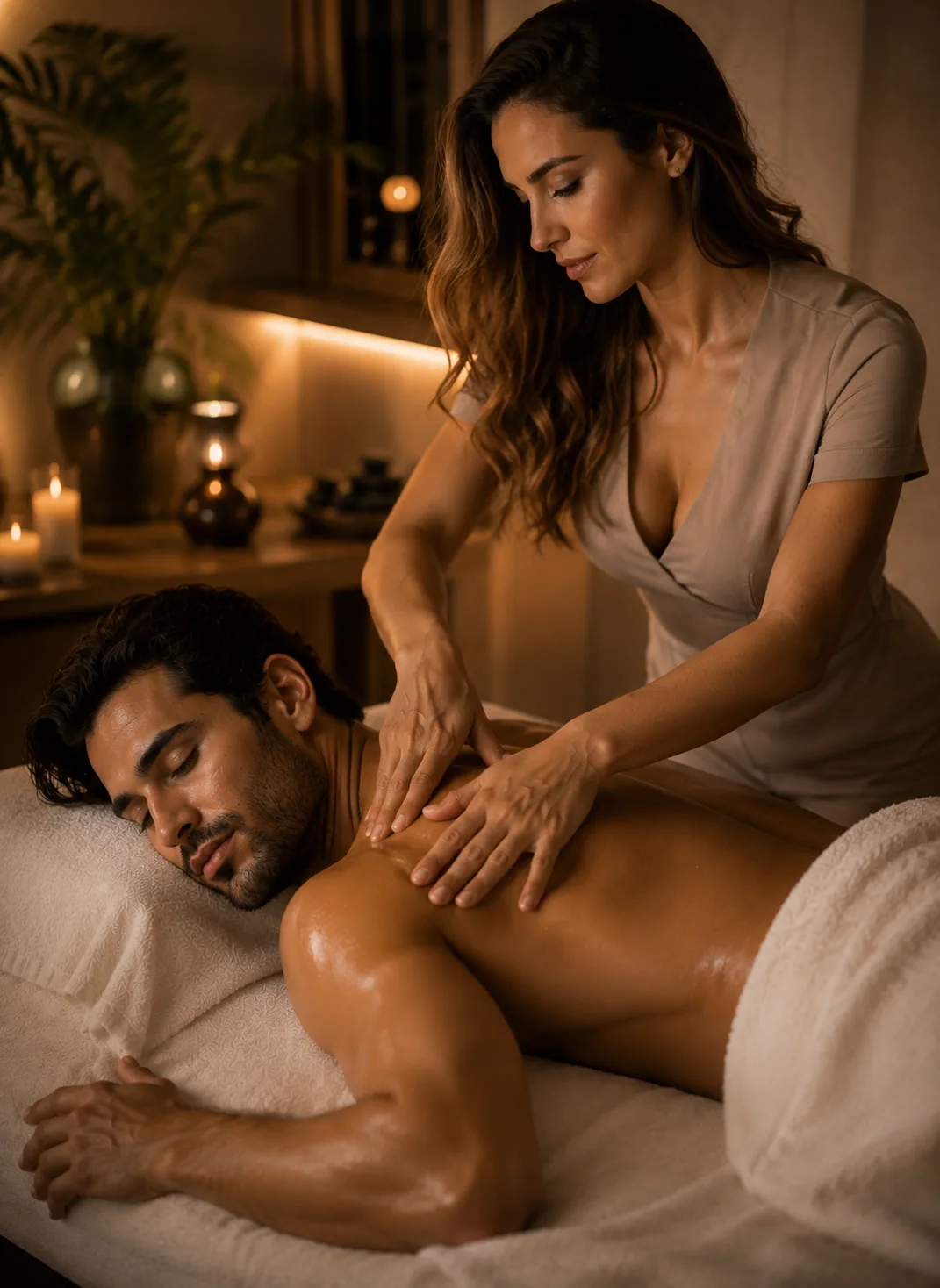
Of the four practices we explain on this blog, kundalini is the hardest to describe without falling into one of two extremes: the esotericism that promises spectacular transformation, or the scepticism that dismisses the whole tradition. Neither helps you decide whether a session is for you.
Let’s take it in parts.
What the tradition says
Kundalini comes from the Sanskrit for “coiled.” In yogic and tantric traditions it names a latent vital energy, pictured as a serpent coiled at the base of the spine. The practice — breath, postures, meditation, and in some schools bodywork too — aims for that energy to rise along the spine, passing through the seven energy centres, or chakras.
Two things matter about this frame:
First: it is a symbolic map, not an anatomical description. Chakras are not organs. They are a way of organising bodily experience into zones — base, belly, plexus, chest, throat, brow, crown — that turns out to be remarkably useful for directing attention, even though it appears in no anatomy atlas.
Second: the tradition insists on caution from the outset. The classical texts warn against forcing the ascent without preparation and without guidance. That warning, rather than the serpent mythology, is the part contemporary practice ought to inherit most carefully.
Kundalini is the only one of these practices whose own tradition comes with a built-in warning. It’s worth taking seriously.
What a session actually does
Stripped of vocabulary, the work combines three elements:
Sustained, directed breathing. This is the main instrument. Long breaths, with a defined ratio between inhale and exhale, held for minutes at a time. This has verifiable physiological effects on the autonomic nervous system: heart rate drops, muscle tone changes, alertness shifts.
An ascending path of attention. Touch and verbal cues carry attention from the base of the body upward, in order. There’s nothing mystical about it: it’s an attentional focusing technique, and it works because directed attention changes what’s felt in each area.
Slow contact, sometimes without pressure. Part of the work is done with hands resting or suspended, without manoeuvre. It sounds like very little, and it’s one of the parts that registers most.
What may come up during the session
Worth knowing in advance, because it’s disorienting if unexpected:
- Involuntary trembling or vibration, especially in the legs and hips. That’s sustained muscular tension discharging, and it’s normal.
- Sensations of heat that travel. The tradition reads them as energy moving; physiology reads them as vasodilation changes as alertness drops. Both descriptions point at the same thing.
- Emotion with no identifiable cause. Tears, laughter, sudden tiredness. It doesn’t need explaining or containing.
- Nothing at all. Many sessions are simply calm. That’s a valid outcome too, and a serious practice doesn’t frame it as a failure.
When it’s better to wait
This is the section of the article that matters most to us. Intense breathwork is not neutral, and there are situations where the responsible thing is not to do it:
- Diagnosed cardiovascular or respiratory conditions, uncontrolled hypertension, epilepsy or glaucoma.
- Pregnancy, unless your doctor explicitly says otherwise.
- Active episodes of severe anxiety, panic attacks or acute psychiatric conditions. Sustained hyperventilation can intensify them.
- Recent surgery or any recovery process underway.
None of this is fine print. We ask about these points in the initial conversation, and if something comes up we adjust the ritual, reduce the breathing intensity or recommend postponing. We’d rather lose a booking than hold a session that isn’t right.
And the obvious: a kundalini massage does not treat anxiety, depression, trauma or any medical condition. It can accompany the general wellbeing of someone who is also in professional hands. It substitutes for none of it.
How we work with these principles
We don’t have a product called “kundalini massage” in the catalogue. What is true is that guided breathing and attentional work are the spine of every ritual we offer, from the introductory terapia blanca to the most enveloping variants. Names, durations and prices are published in full in the price list.
If breathwork and energy are specifically what interest you, say so in the prior conversation: that is exactly the kind of note that changes how a session is conducted.
To get started
- Eat light. Deep breathing on a full stomach is uncomfortable and ineffective.
- Avoid stimulants in the hours before. Coffee competes with the objective.
- Keep time free afterwards. Rushing out of a session like this wastes the part that matters most.
- Start with 60 minutes. Enough to know whether breathwork makes sense to you.
- Share your history in the first conversation, which is free and happens by WhatsApp or phone before scheduling.
Keep reading
The classical pillars of the tradition are explained in the guides on yoni massage and lingam massage. At the opposite end in terms of approach — pure bodily technique, no spiritual frame — is nuru massage. And if you’re considering it for two, here’s why a couples ritual rearranges the bond.
This article is informational wellness content. It does not replace medical or psychological advice and promises no clinical outcome. If you have a health condition, talk to your own practitioner before booking.