When someone types “lingam massage” into a search bar, they’re usually after two things at once: understanding what it is, and confirming whether it’s what they suspect it is. This article tries to answer the first honestly, because the second resolves itself once the frame is clear.
The term and what it implies
Lingam is a Sanskrit word for the masculine principle of creation. In Hindu tradition it is a sacred symbol, represented in temples as a stone column, and it always appears in relation to the yoni, its feminine counterpart. The classical image shows them together: two forces that only make sense in relation to each other.
That the name comes from a religious symbol rather than clinical anatomy says a good deal about the approach. In its original context, lingam massage is not a stimulation technique wrapped in spiritual language. It is a ritual of reverence, directing attention toward a part of the body that culture usually treats with haste, defensive humour or a demand for performance.
What contemporary practice sets out to do
The version practised today in wellness spaces keeps four goals from the original framing:
Switching off the logic of performance. This is the axis. Much of the male tension around the body comes from almost every touch being evaluated: does it work, does it last, does it deliver. The session removes that criterion entirely, and for many men that hour is the first in a long time with nothing to prove.
Widening the sensory register. Slow, sustained work aims to stop sensation concentrating in one point and let it distribute instead. It’s a change in quality, not in intensity.
Ordering the breath. In tantra, breath is the main instrument. Breathing slowly and deeply while receiving contact is a trainable skill, and it’s what most people take home.
Releasing emotional tension. Tiredness, emotion or an unexpectedly deep calm are not unusual. They happen because the body lets go of something it was holding, not because the session was “intense.”
What’s therapeutic isn’t the manoeuvre. It’s spending a whole hour receiving with nothing expected in return.
How a session is structured
The sequence is the one that holds any serious tantric ritual, and none of its stages is optional:
- Prior conversation. Clothed, unhurried, in private. Boundaries are set, medical history is asked about, and the word that stops the session is agreed on.
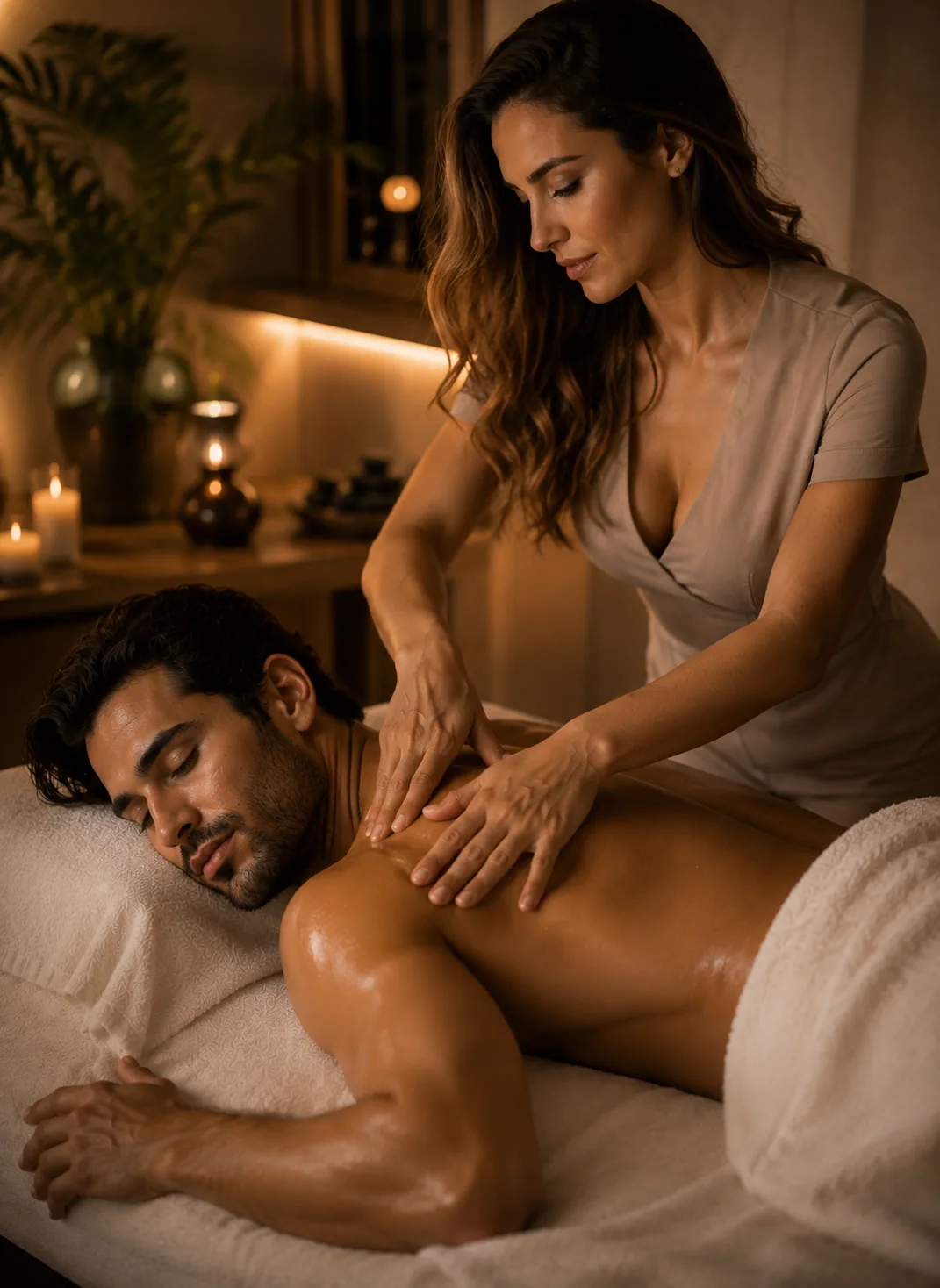
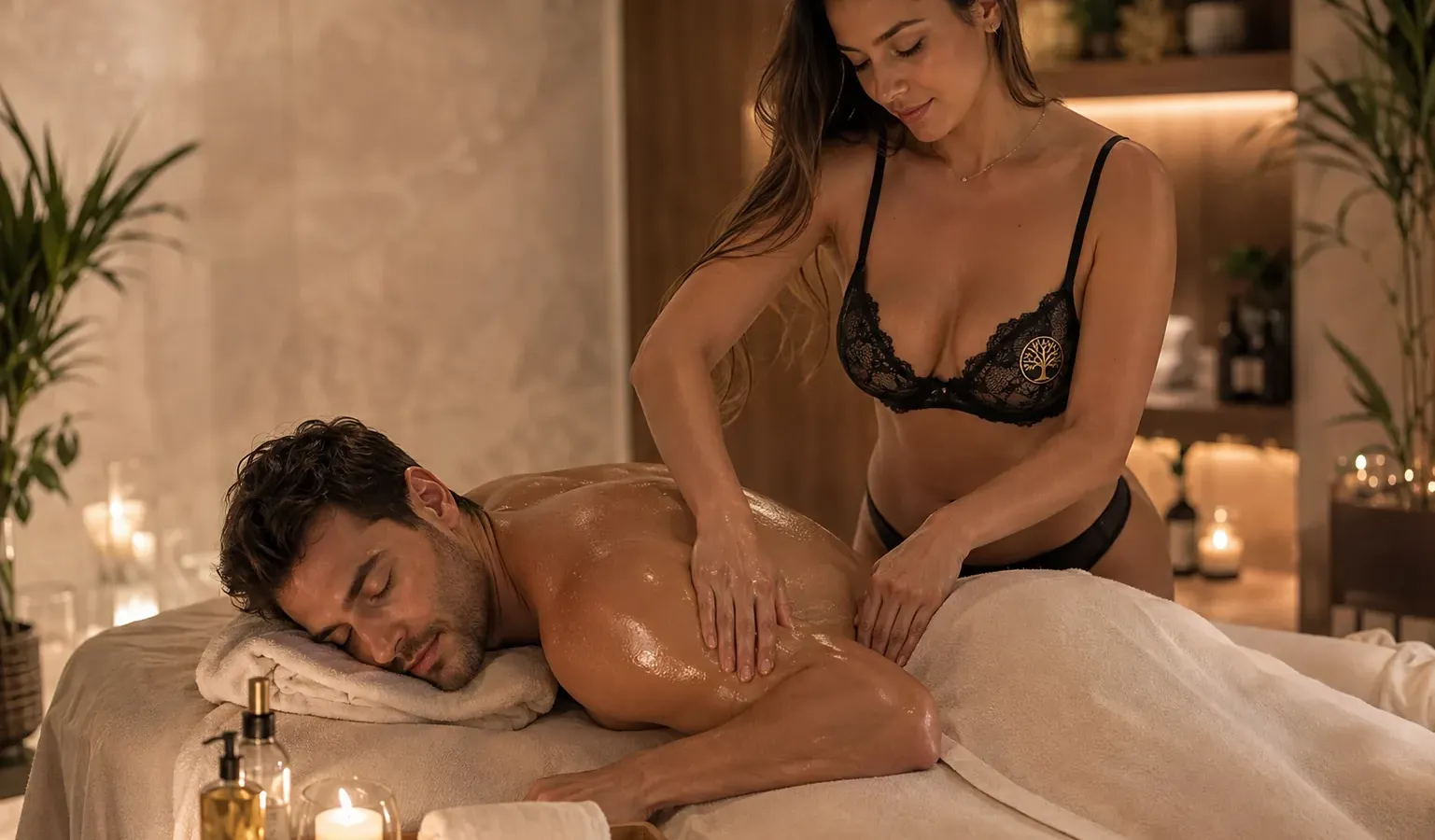
- Preparing the space. Temperature, scent, low light, music. The nervous system needs signals of safety before it lowers its guard.
- Guided breathing. Several minutes before any contact. This is the stage that most surprises anyone expecting pure technique.
- Full bodywork. Back, hips, abdomen, legs. The session never begins with the area the practice is named after.
- The conscious stage. Slow, built on sustained contact, with clear instructions and pauses. The instruction repeats: there is nowhere to arrive.
- Integration. Silence, a blanket, herbal tea. Leaving a deep state abruptly wastes the session.
The four most common misunderstandings
“It’s a sexual service under another name.” No. The difference isn’t vocabulary, it’s structure: a professional practice pursues no ending, and says so from the first contact. At Jardín del Edén our code is explicit — rituals include no contact beyond therapeutic massage — and it isn’t negotiated inside the suite.
“It treats dysfunction.” It is not a medical treatment and shouldn’t be presented as one. If there is a clinical picture — pain, medication, a diagnosed condition — the consultation with a health professional comes first. A ritual can accompany general wellbeing; it replaces no one.
“More intensity means a better session.” The opposite. A session’s quality is measured by how far the pace drops, not by how high it climbs.
“It’s only for people already practising tantra.” Most people who come have never done anything like it. No preparation is needed beyond arriving unhurried.
What we actually offer, by name
We don’t sell “lingam massage” as a standalone product. Our catalogue is complete tantric rituals, individual and for couples, each with a name, a duration and a published price in the price list: from the introductory terapia blanca to the terapia nuru variants, in 60- and 90-minute formats.
What is true is that the principles you’ve just read — breath, slowness, absence of a goal, agreed boundaries — are the foundation of all of them. The prior conversation defines the focus of your session as far as our professional frame allows, and if what you’re looking for falls outside that frame, we tell you before you book, not once you’re in the suite.
Before booking, anywhere
Three signals that say more than any published description:
- There is a real prior conversation. If nobody asks you anything before starting, there’s no serious practice behind it.
- Limits get explained unprompted. A professional space says what it does not do, on the first call, matter-of-factly.
- Coordination is discreet. Neutral messages, a single channel, zero insistence. Discretion shows up in the logistics, not in the copy.
We develop these criteria in the guide on how to choose your sanctuary.
Keep reading
Its direct counterpart in the tradition is yoni massage. If you’re curious about the most enveloping technique in the catalogue, there’s nuru massage; and if breathwork and energy are your interest, kundalini massage. To experience it with someone, here’s why a couples ritual rearranges the bond.
This article is informational wellness content. It does not replace medical or psychological advice and promises no clinical outcome. If you have a health condition, talk to your own practitioner before booking.